When traveling batteries are essential for keeping your devices powered and fully charged, but are lithium batteries safe to bring on passengers planes?
Here is a short answer:
You can take or bring dry batteries on airplanes, but uninstalled lithium and lithium-ion batteries are banned from checked baggage. You can only take one spare battery (separated) in carry-on not exceeding 100 watt-hours, or two spare batteries, not exceeding 160 watt-hours each and with airline approval.
This post covers everything you need to know about flying with lithium batteries on planes, carry-on and checked luggage.
Let’s dive right into the details.
TL;DR
- You can bring dry batteries (AA, AAA, 9V, etc.) in carry-on and checked baggage.
- You cannot pack spare lithium and lithium-ion batteries checked baggage.
- Carry-on lithium batteries: 1 spare ≤100 Wh or 2 spares ≤160 Wh with airline approval.
- Protect battery terminals to prevent short circuits.
- Batteries for mobility devices are allowed in checked baggage with TSA approval.
- Toys with non-rechargeable batteries are allowed in carry-on and checked baggage.
- Follow safety precautions; incidents are rare if packed correctly.
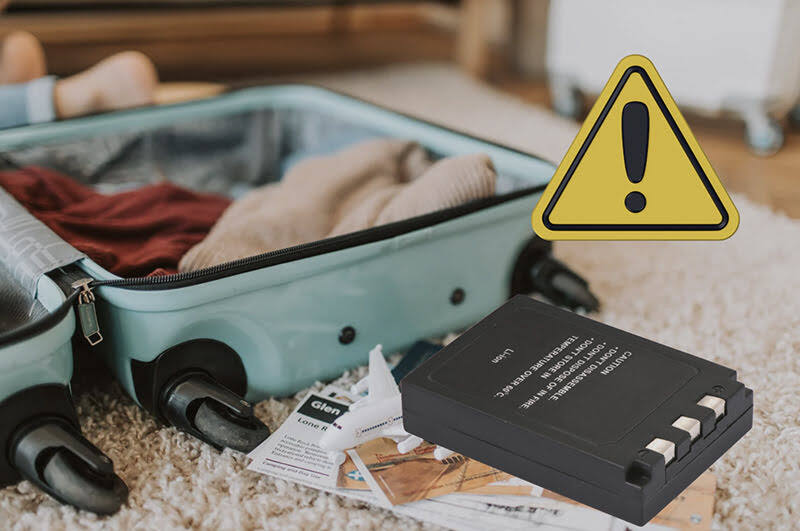

What Is The TSA Guidelines On Lithium Batteries?
Can You Go Through The TSA Security Checkpoint With Batteries?
The Transportation Security Administration (TSA) are the guys that is in charge to keeping passengers and the airplane safe by screening their belongings on flights within and from U.S. airports.
And according to TSA, dry batteries are allowed in both carry-on and checked baggage without any restrictions.

However, lithium batteries with more than 100 watt-hours may be allowed in carry-on baggage only with airline approval, and not in checked baggage.

Lithium batteries may catch fire and overheat at any time.
In some cases the TSA will make an exception and let passengers take banned batteries, like wet batteries or any batteries with liquids, if they power a wheelchair or any other assistive or mobility device.
Can I Take Lithium Batteries In Carry-on?

Lithium batteries with 100 watt-hours or less inside a device are allowed in carry-on baggage.
According to the FAA, spare (uninstalled) lithium-ion and lithium metal batteries, including power banks and cell phone battery charging cases, must be transported in your carry-on bag or personal item.
If your carry-on will be checked at the gate, you will be required to remove all batteries and take them onboard.

When taking your lithium batteries in carry-on (separated), check the battery terminals and make sure they are not in contact with other metals or other battery terminals.
Lithium batteries with 100 watt-hours or less inside a device are advised to be carried in your carry-on baggage.
According to the regulations, the batteries you transport must be strictly for your personal use, you can’t bring large amount of batteries to sell them or profit from them when you get home.
Can You Take Lithium Batteries In Checked Luggage?
Taking dry batteries like AA 1.5V LR6 AM-3 Alkaline Dry Batteries in checked baggage is allowed without restrictions, but they must be packed and protected correctly.
However, lithium batteries, like Energizer 9V Batteries or Ultimate Lithium, are only allowed in carry-on baggage.

Final Thoughts
Even though lithium batteries are double-edged swords, battery incidents are rare, which is why the TSA and most air travel authorities do allow them on planes.
When practicing battery safety and packing your batteries properly, there is no need to worry.
I hope this answers all your questions about taking batteries on a plane.
Frequently Asked Questions about taking lithium batteries on planes
How Do I Know If I Have a Lithium Battery?
Let’s first see the difference between lithium and lithium-ion. Lithium batteries are primary cells, meaning you cannot recharge them when they are empty, while lithium-ion batteries are secondary cells, meaning you can recharge and use them many times. Another way to check is the packaging. The packaging will indicate if it is a lithium battery. If you can access the battery, the manufacturer will put all necessary info on it, including proper use and safety instructions.
Why Are Batteries Not Allowed In Checked Luggage?
To avoid fire and related incidents, the FAA and TSA have set precautions and guidelines to prevent dangers caused by items like lithium batteries. Lithium batteries are powerful and can potentially explode in a hot environment or if repeatedly recharged. Dendrite formation may occur, triggering a short circuit that can cause the battery to catch fire or explode. Lithium-ion batteries power many devices including smartphones, laptops, e-bikes, scooters, e-cigarettes, smoke alarms, toys, and even cars. A small number of these batteries may be defective and cause a fire. It’s always a good idea to follow best practices for storing lithium batteries to avoid potential danger.
What Is a 100 Watt-hour Battery?
Most airlines allow a 100 watt-hour lithium battery in carry-on baggage. A 100 watt-hour battery can deliver 100 watts of power for 1 hour, or 20 watts for 5 hours. You can check this detailed guide on battery capacity measurement on Bixpower to better understand the unit.
Can Toys With Batteries Be Checked In?
Yes, toys with traditional non-rechargeable batteries are allowed in carry-on and checked baggage. If your toy uses rechargeable batteries, they may be lithium-ion batteries and must not go in checked baggage.
People also ask:
- Can You Take Lipo Batteries on a Plane?
- Can I Bring a Phone Charger On a Plane?
- Can You Take An Xbox On A Plane?
- Can you take Headphones on a plane?
- Can You Bring a Magnet On a Plane?
- Can You Fly With Smart Luggage?
- Can You Bring Laser Pointers On Planes?
- Can You Bring A GoPro On A Plane?
- Can You Bring Alexa On a Plane?
- Can I Bring Electronics In My Carry-on?