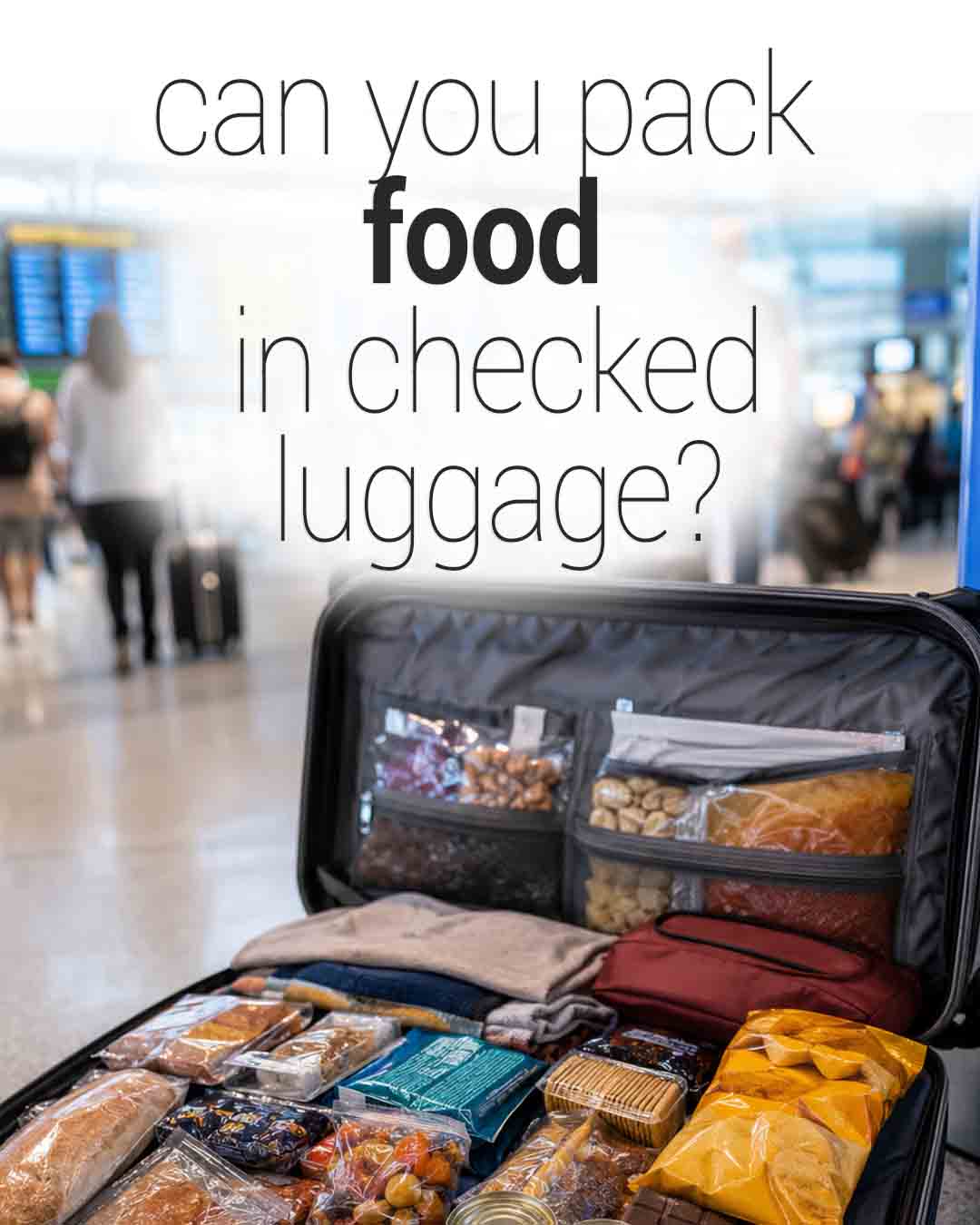
Taking your favorite food with you when traveling will provide a sense of comfort and security, but can you pack food in checked luggage?
Generally, you can pack most types of food in your checked luggage in domestic flights without any quantity limits, but for international flights, some types of food will not be allowed in your destination country, even if you pack it in your checked bag and pass the security.
I this post I will cover everything you need to know about packing food in checked baggage in both domestic and international flights.
Let’s dive right in.
TL,DR
You can pack most food in checked luggage on domestic flights, including liquids, frozen food, canned goods, and homemade food.
The TSA doesn’t limit food in checked bags the way it does in carry-ons, but you need to pack food securely to prevent leaks, spills, or spoilage.
For international flights, the biggest restrictions come from customs rules at your destination, especially for meat, dairy products, fruits, vegetables, and other agricultural items.
What Is The TSA Rules About Food In Checked Baggage?
You can bring any type of food in a checked bag on domestic flights without any restrictions, both solid and liquid food.
The TSA 3-1-1 liquid rule does not apply for checked baggage.
The TSA and most airport security authorities do recommend placing food items in checked bags, especially if they are liquid, creamy, or spreadable, to speed up the screening process at the security checkpoint and to avoid any inconvenience at the airport.
Regardless of where you place your food, it will be inspected by baggage security screeners, so do not pack any flammable food products inside your bag (like cooking spray oil, for example), or they may end up being confiscated by security officers.
Here is a screenshot of the TSA giving the green light to Rafael to bring freeze-dried foods in both checked and carry-on baggage.
Types of food
Domestic flights (checked bag)
International flights (checked bag)
Bread
Permitted
Usually allowed
Rice (cooked or uncooked)
Permitted
Usually allowed
Chips / Crisps
Permitted
Usually allowed
Chocolate
Permitted
Usually allowed
Cookies & Biscuits
Permitted
Usually allowed
Candy & Sweets
Permitted
Usually allowed
Pizza
Permitted
Usually allowed
Sandwiches
Permitted
Depends on ingredients
Homemade Food
Permitted
Depends on ingredients
Frozen Food
Permitted
Check destination rules
Canned Food
Permitted
Usually allowed
Beef Jerky
Permitted
Often restricted
Cooked Meat
Permitted
Often restricted
Raw Meat
Permitted (properly packed)
Often prohibited
Seafood
Permitted
Frequently restricted
Eggs
Permitted
Frequently restricted
Milk & Dairy Products
Permitted
Often restricted
Cheese
Permitted
Depends on the country
Fresh Fruits
Permitted
Frequently prohibited
Fresh Vegetables
Allowed
Frequently prohibited
Nuts
Permitted
Usually allowed
Coffee Beans / Ground Coffee
Permitted
Usually allowed
Tea Bags
Permitted
Usually allowed
Honey
Permitted
May require declaration
Jam & Preserves
Permitted
Check destination rules
Alcohol Under 70% ABV
Allowed (airline limits may apply)
Subject to customs rules
Alcohol Over 70% ABV
Not allowed
Not allowed
Cooking Spray Oil
Not allowed
Not allowed
How Do You Pack Food In Checked Luggage?
Now that you know that most types of food are allowed in checked baggage, there is one more thing to consider: packing your food safely.
Make sure that you keep it fresh and secure while you’re on your journey, or there is a greater chance that your food will spoil during your flight and make a mess inside your bag.
One way to do this is to use a cooler or ice packs to help protect your food items.
But if you are traveling with solid food and use vacuum-packed bags like Ted, you do not need to worry about anything; you can just toss them inside your bag, and you are good to go.
It is always preferable to avoid placing any expensive or valuable items in your checked bag. If you are traveling with some type of expensive food, consider taking it in your carry-on baggage whenever possible. Checked bags can be mishandled, damaged, or even stolen.
What Foods Are Not Allowed In Checked Luggage?
We have already covered the types of food you can and cannot bring in both carry-on and checked baggage, and if you are placing your food in glass bottles, you can read more in this post.
But as a general rule, only foods or food products containing flammable liquids are mostly banned in checked baggage, such as alcoholic beverages over 140 proof (70% alcohol by volume) and cooking spray oil.
Food that can easily spoil is better carried in your carry-on bag or as your personal item, if possible.
Can You Bring Food In Checked Luggage On International Flights?
Photo by Pixabay on Pexels.com
If you have an international flight, it is better to double-check the official website of your destination country or contact your airline.
The customs authorities of the country you are flying to may have different rules regarding the food items you can bring, even for personal use.
Most countries are concerned about diseases and pests.
Even if some items are allowed on domestic flights, you may not be able to bring them into certain countries.
For instance, you may not be able to bring meat into the U.S. from other countries, and travelers arriving from outside the European Union are not allowed to bring most meat products into the UK.
On the other hand, most dried foods are permitted in many countries for personal use.
Just be careful with raw meat, dairy products, vegetables, and fruits, as many countries have restrictions because of concerns about diseases and pests.
Final Thoughts: What Should You Know Before Packing Food In Checked Luggage?
Almost any type of food is allowed in checked baggage on domestic flights.
There are no major limits or restrictions unless you are traveling with certain food products that contain alcohol or flammable liquids.
For international destinations, restrictions mostly apply to meat, dairy products, and eggs, as many countries are concerned about introducing pests or diseases into their territories.
I hope this helps.
Happy travels.
If you found this answer helpful, please share it.
Frequently Asked Questions About Packing Food In Checked Baggage
Can you bring homemade food in checked luggage?
You can pack homemade food in your checked luggage. Just make sure it is well sealed to prevent leaks or spills, and check your destination country’s customs rules if you are flying internationally.
Can you pack frozen food in checked luggage?
Frozen food is allowed in checked baggage. To keep it cold, use insulated bags or ice packs, and make sure everything is packed securely to avoid a mess if it starts to thaw.
Can you bring canned food in checked luggage?
You can bring canned food in checked bags, and it is actually easier to pack there since heavy cans can add a lot of weight to your carry-on.
Can you bring fresh fruit and vegetables in checked luggage?
You can pack fruits and vegetables in checked baggage on domestic flights. For international trips, however, many countries restrict fresh produce, so always check local customs rules before you travel.
Can you bring meat or seafood in checked luggage?
Cooked or frozen meat and seafood are generally allowed in checked luggage on domestic flights. International destinations may have strict restrictions, especially on fresh or raw products.
Do you need to declare food in checked luggage on international flights?
In many countries, you are carrying food internationally, it is always a good idea to declare it on your customs form. Failing to do so could result in fines or confiscation.
How should you pack food in checked luggage to prevent leaks?
You can use airtight containers or vacuum-sealed bags whenever possible. If you are packing liquids, sauces, or jars, place them inside a zip-top bag and wrap fragile items in clothing or bubble wrap for extra protection.
Can you bring cooked meals in checked luggage?
You can pack cooked meals in your checked bag. Just let the food cool before packing it, use a leak-proof container, and keep perishable meals cold with an insulated bag if you have a long journey.
Gargie, is writer, traveler & a digital marketing specialist
passionate about traveling and exploring new cultures. She is a savvy traveler who likes to pack light, testing various luggage brands and seeking out budget-friendly airline options. Gargie enjoys creating unique recipes when she’s not on the go.