

When traveling, one of the priorities is to protect your luggage, especially in this digital age when travelers carry expensive devices, but can you lock checked luggage? And can you zip tie your checked luggage?
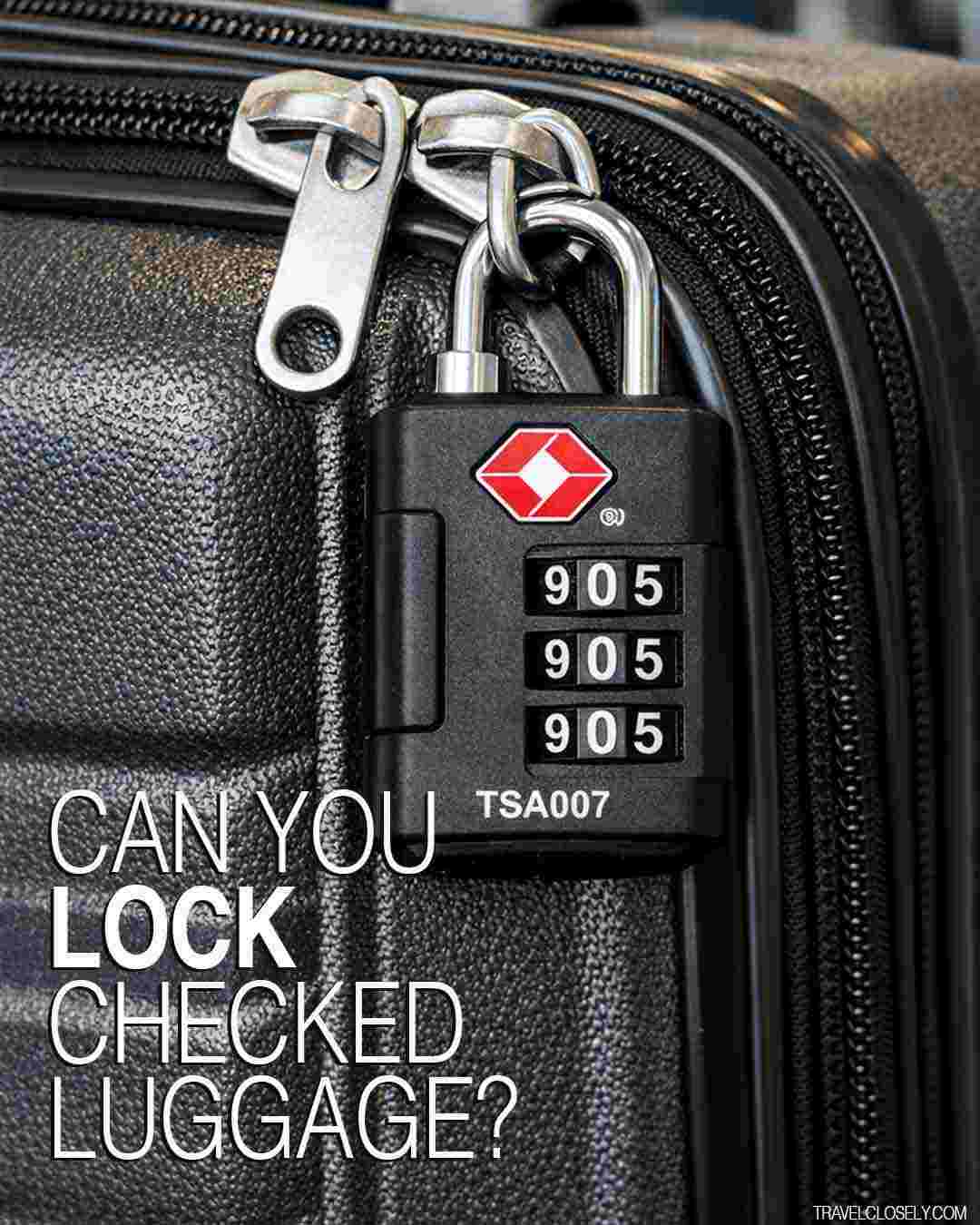
The short answer is yes, you can absolutely lock your checked luggage to prevent theft and keep your belongings safe and secure, but you need to use a TSA-approved lock. These locks allows the TSA agents to open and inspect your bag without breaking the lock or damaging your suitcase.
In this post, I will help you learn how to properly secure your checked bag, whether zip ties are a good idea, what airlines say about locking a checked bag, and how to stay compliant with TSA rules.
Let’s dive right in.
TL;DR
- You can lock your checked luggage when flying and you definitely should for extra security.
- Make sure you use a TSA approved lock so the security agents can open and inspect your bag without breaking the lock.
- If you don’t have a TSA lock, you can use zip ties, but keep in mind they may be cut during inspection and probably won’t be replaced.
- Avoid packing expensive items like electronics, jewelry, or cash in your checked bag keep those in your carry-on or personal item instead.
- If you’re flying internationally, rules are usually similar, but security procedures can vary by country, and non-TSA locks may be cut if officers can’t open them.
Are You Allowed To Lock Your Checked Luggage?
Yes, you can lock your checked bag and make it secure on both domestic and international flights.
If you don’t lock your suitcase, you run the risk of losing your items because you don’t have an eye on it.
But even when you securely lock your checked suitcase, it is not advised to place your expensive items in it.
According to SITA’s 2024 Global Baggage Report, one in twenty bags is lost or stolen, which accounts for about 1.8 million bags each year.
Your laptop or any electronics should go inside your carry-on or personal item bag.
Are There Any Rules For Locking Checked Luggage?
Different airlines and countries have slightly different rules.
In the US, the TSA lets you lock your checked luggage using TSA-approved locks. Other countries, like in Europe do not have a single “TSA-style” universal lock system across all European airports.
But in general if the security officers can’t open a lock, they will cut during the inspection.
Can I Zip Tie My Checked Luggage?
If you don’t have a TSA-Approved Lock, it’s a good idea to zip tie your luggage.
It will secure your bag and, in addition, it will give you a sign at the airport to know if there was an attempt to open your bag and check if there are missing items before leaving the airport.
The TSA allows using zip ties; however, they don’t encourage them in case they want to open your bag for further inspection, and most likely the TSA will not replace your zip ties.
This passenger asked the TSA on X (Formerly Twitter) if zip ties are okay to use if he can’t use luggage locks.

The TSA replied that zip ties are allowed but not encouraged, as they may need to be removed if the bag alarms and must be opened for inspection.
In this tweet, the TSA replied to John that zip ties are allowed to secure bags. The TSA screening officers will make every attempt to ensure that opened luggage, personal belongings, and the lock are placed back in the original state in which they were received.

But also in this screenshot below they replied that they don’t replace zip ties that need to be cut for security purposes.

How Do I Protect My Checked Luggage?

When traveling, you want two things: your bag to be in good shape all the time and to protect your items.
Here is how to achieve both of them while you are on your journey.
- Invest in a Solid Hard-Side Bag
Investing in a solid and hard-sided suitcase for your checked bag is also a solution to protect your bag and belongings.
Hard-sided luggage is known worldwide for its durability and is backed by reliable warranties.
You can rely on hard-side luggage, especially if you choose Samsonite or any other well-known brand.
You’ll have peace of mind knowing that your luggage will hold up through rigorous use.
- Do Not Place Your Expensive Items in Checked Baggage
To protect your luggage, it is always better not to put your expensive items inside your checked bag.
Cash, rings, or any jewelry can go in your pocket, purse, or personal item.
In addition, most airlines do not cover expensive items, and they do not take responsibility for damage to them either.
So just remember: do not put anything expensive or valuable in your checked bag.
| What to Do | Why It Matters |
|---|---|
| Use a TSA-approved lock | It will secure your bag while allowing the security officer to open your bag without damage |
| Take a photo of your suitcase (front and back) | Have a proffer about your bag condition and makes claims easier if lost or damaged |
| Remove old airline tags | To avoid confusion at baggage handling and prevents misrouting |
| Put contact info inside the bag | Helps airlines return your luggage if external tags are lost |
| Use a unique identifier (strap, ribbon, sticker) | Makes your suitcase easy to spot and adds a layer of visual security |
What Is a TSA-Approved Luggage Lock?

A TSA-approved lock can be opened by a TSA agent without needing to be broken.
The TSA has worked with several companies to develop locks that can be opened by TSA agents with a universal “master” key, and they are recognized by packaging that indicates they are TSA approved.
There are three types of TSA-approved locks:
- Combination locks, do not need a key, good for frequent travelers
- Key locks, simple and reliable, but you must keep the key safe
- Cable locks, useful for securing multiple zipper pulls
You can choose a solid and sturdy TSA-approved luggage lock so you don’t need to worry about your expensive lock being cut at the airport.
I Forgot to Lock My Checked-In Luggage, What Will Happen?
Most of the time, you don’t need to worry if you forgot to lock your checked baggage.
It is rare that your bag will get opened by a stranger or luggage handlers, but it depends on the airport.
And as long as you don’t put any expensive items inside, no one is going to take your clothes.
Honestly, when I check in my bag, I don’t worry about it anymore.
Since I can’t control how my bag will be handled or if it will be tampered with, all I do is choose a solid hard-side bag, avoid placing expensive items inside it, and ask the airline staff at the check-in counter if they will handle my bag carefully.
Hand Picked TSA Approved Luggage Locks
Here are the different types of luggage locks:
- Cable Locks
- Combination Locks
- Key Locks
I did my research to find some of the best TSA locks on the market and what travelers’ opinions are.
To help you narrow down your search, here’s all the information you need to know about the best luggage lock that will suit your needs.
Can You Lock Carry-On Luggage?
Yes, you can use a lock for your carry-on luggage.
It is okay if it is locked all the time as long as it is next to you, and if airport security wants to inspect your bag, you will be there to open it.
Though securing your bag is never a bad idea, no matter where you are, especially when traveling with valuable items.
You can use a TSA-accepted cable luggage lock; it works for almost all kinds of carry-on luggage, backpacks, bags, small cabinets, briefcases, and computer bags.
Final Thoughts: Can You Lock Checked Luggage?
Whether you are traveling with American, United, or Delta Airlines you can definitely lock your check luggage.
Using a good luggage lock will help secure your belongings and items, but If possible ensure that you use a TSA approved lock.
Ad It will help the TSA easily access your bag if they need to without breaking it.
A non TSA lock or zip ties can also work, but keep in mind that if your bag is selected for inspection, security officers may have to cut them off.
I hope this helps
Happy travels
Locking Checked Luggage FAQs
- Is locking checked luggage legal?
Yes, it is legal to lock your checked bag on both domestic and international flights. In the U.S., the TSA allows you to locked bag, but they advise to use a TSA-approved lock so the agents can open your luggage without cutting it. - What makes a lock TSA-approved, and why does it matter?
In a simple way, the TSA agents have a key to open a TSA approved lock. - Can I use a smart lock or Bluetooth lock on checked luggage?
Yes, but only if the smart lock is TSA-approved. If it cannot be opened with a TSA master key, security officers may cut it during inspection. - Should I use luggage straps in addition to a lock?
Luggage straps gives your suitcase an extra layer of security. They help prevent accidental zipper openings, even if the lock is broken, and make your suitcase easier to identify on the baggage carousel. - How can I tell if someone tried to open my luggage?
You can use colored zip ties, tamper-evident seals, or security stickers on your zippers. If they are broken or missing when you arrive, your bag may have been opened for inspection, if the TSA opened you bag they usually leave a note inside. - What should I do if TSA or the airline damages my locked luggage?
Take a look to your bag aft your receive it at baggage claim. If the lock is damaged, report it to the airline before leaving the airport and take photos. You may need to file a damage claim with the airline or your travel insurance provider. - How can I make sure my luggage arrives safely during a layover?
Label your bag clearly with your name and contact details, confirm your final destination at check-in, and avoid tight layovers when possible. Some travelers also use GPS luggage trackers for extra peace of mind.
people also ask:
- Are TSA locks Safe?
- 13 Best luggage straps
- 10 Best digital luggage scale
- How Is Luggage Stored In An Airplane?
- Can My Luggage Travel Without Me?
- Do Items Get Stolen From Checked Luggage?
- How To Reset A TSA Lock When You Forgot The Combination
