Generally you can absolutely bring a computer keyboard on a plane. It is permitted in both carry-on and checked bags by almost all airlines and security agencies.
In this article I will cover everything about taking computer keyboards in both carry-on and checked luggage. I will shed some light on airline’s rules and regulations, you’ll also get to see some tips on how to protect your keyboard if you decide to transport it in your checked luggage.
Let’s dive right in.
TL,DR
You can bring a computer keyboard on a plane.
Both wired and wireless keyboards are allowed in carry-on and checked bags by the TSA and most airlines.
Carrying your keyboard in your cabin bag is the safest option since checked baggage can be lost or damaged.
You usually do not need to remove a keyboard from your bag during the security screening, although TSA officers can request additional inspection if needed.
If you pack a keyboard in checked luggage, use a protective case or plenty of padding to prevent damage.
For international flights, keyboard rules are generally the same, but it’s always best to check your airline’s baggage size and weight limits before you travel.
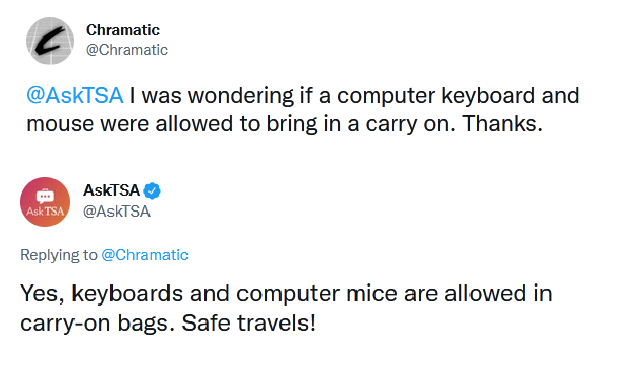
According to the TSA, you can bring both wired and wireless computer keyboards through the security checkpoint without any problem.
This passenger asked the TSA if a computer keyboard and mouse were allowed in carry-on baggage, and the TSA replied that keyboards are allowed in carry-on baggage without any problem.
However, the final decision rests with the TSA officer at the airport, but they have no reason to stop you from bringing your keyboard on your flight.
Do I have to take my keyboard out at TSA?
The TSA officer will not ask you to remove your keyboard or any electronics in general that are larger than a phone from your bag for additional screening. Laptops and tablets are typically required to be removed from the bag and placed in a separate tray.
However, the TSA agent always has the final say when it comes to requiring additional screening for such items.
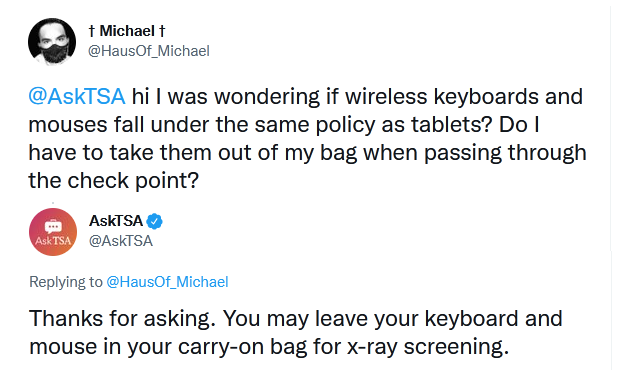
Michael wanted to know if he had to take out his wireless keyboard and mouse at the security checkpoint, and the TSA confirmed: “You can leave your keyboard and mouse in your carry-on bag for X-ray screening.”
Can You Fly With a Computer Keyboard In Carry-On Luggage?
As stated above, the TSA and most airlines allow keyboards in carry-on luggage without restrictions.
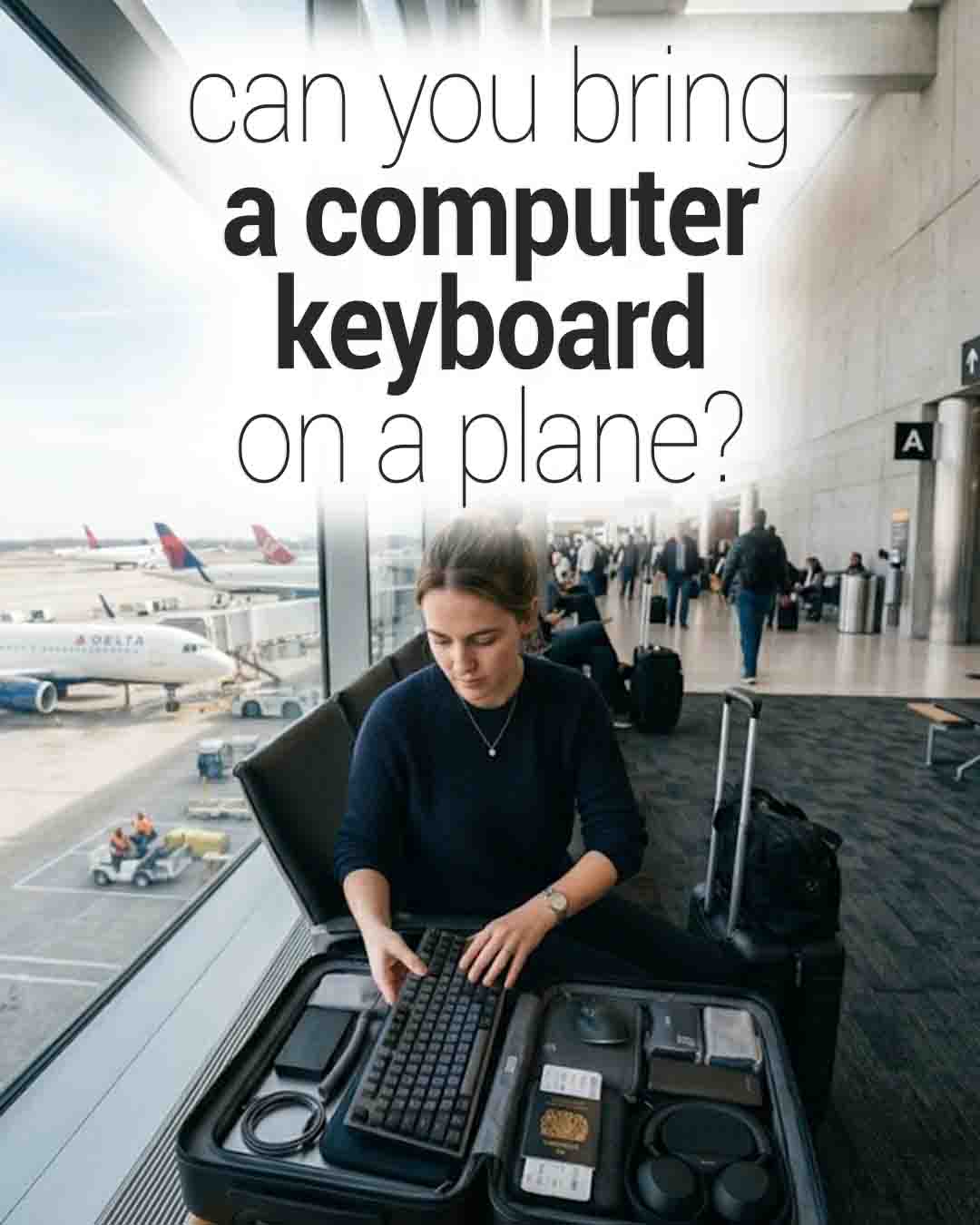
Whether you are traveling with a small keyboard or a large one, make sure that your accessories are well organized and protected.
Also, keep them easily accessible in case you need to use them on board, and you may have to remove them from your bag when you go through the airport security checkpoint.
Forgetting to organize your electronics may cause unnecessary inconvenience or even delays.
Packing electronics in carry-on luggage is a good idea because it gives you easy access to them and minimizes the chance of your belongings being delayed, since you don’t need to wait for checked baggage once you reach your destination airport.
Can You Pack a Computer Keyboard In Checked Luggage?
You can pack both wireless and wired keyboards in checked luggage on most airlines without any problem. However, it is not the best approach unless you don’t have another choice.
Checked luggage can sometimes be delayed, damaged, lost, or stolen, so it is better to avoid risking electronics or other expensive items inside your checked baggage.
If you decide to pack your keyboard in checked baggage, make sure that it is well protected and properly covered.
Electronics and fragile items can sometimes suffer serious damage during transit.
According to the International Air Transport Association (IATA), 41% of baggage mishandling occurs during flight transfers, making connecting flights the most common stage of a journey where luggage problems happen.
Can You Carry a Computer Keyboard In International Flight?
Traveling internationally with a computer keyboard, or electronics in general, differs from one country to another and may also require compliance with individual airline policies.
However, most keyboards are fine to bring on international flights with almost any airline. Just make sure that your keyboard does not exceed your airline’s carry-on size limits.
If you find it challenging to meet your airline’s carry-on luggage limits, you can contact the airline on X (formerly Twitter), and they will answer your question.
You can also check the airline’s luggage size and weight limits online.
The Best Way To Travel With Electronics
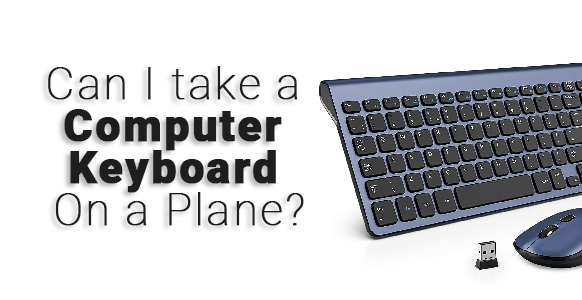
Wireless Keyboard Mouse Combo
When traveling with your keyboard, you can simply place it inside your bag and secure it with clothes or another soft material.
However, regular luggage bags do not offer enough protection for keyboards or other electronics. That is why travel cases can help you carry your keyboard more safely.
You can use a keyboard case. What makes these cases different is that they help protect your keyboard from scratches and damage while traveling.
Pack Your Keyboard Neatly
To keep your computer keyboard in good shape while traveling, it is recommended that you protect it properly, even when using a case.
It is also a good idea to place all of your electronic gadgets, such as laptops and other equipment, in a hard-sided carry-on or cabin bag.
Traveling with a hard-sided suitcase helps keep everything protected and reduces the chances of electronics or your keyboard being damaged.
Final Thoughts
Computer keyboards are allowed through the security checkpoint and in both carry-on and checked baggage without any problem.
If you are traveling with a smaller airline, make sure to review its baggage allowance. You can also contact the airline and ask whether you can pack your computer keyboard in your carry-on luggage or transport it in checked baggage.
I hope you find this article helpful and that you’ve gotten the answer you were looking for. Please share this article on social media if you think it is helpful.
A friend or someone in your community may be interested in learning about traveling with a computer keyboard or other electronics.
I hope this helps.
Happy travels.
FAQ About Bringing a Computer Keyboard on a Plane
Can You Bring a Wireless Keyboard on a Plane?
You can bring a wireless keyboard on a plane in both your carry-on and checked baggage. Most wireless keyboards use small batteries and are treated like other personal electronic devices. If your keyboard is rechargeable, it’s generally a better idea to keep it in your carry-on bag.
Can You Bring a Mechanical Keyboard on a Plane?
Mechanical keyboards are allowed in both carry-on and checked luggage. Since many mechanical keyboards are expensive and can be damaged if luggage is handled roughly, most travelers prefer to pack them in their carry-on bags whenever possible.
Do You Need to Remove a Keyboard at Airport Security?
In most cases, no. Unlike laptops, computer keyboards can usually stay inside your bag during X-ray screening. However, the TSA officers may ask to inspect any item for additional screening if needed.
Will a Computer Keyboard Trigger Additional TSA Screening?
Computer keyboards contain circuit boards, wires, and other electronic components that may attract additional attention during screening. If this happens, don’t worry. The TSA officers may simply take a closer look before allowing you to continue.
Can You Bring a Keyboard and Mouse on a Plane?
You can bring both a keyboard and mouse on a plane without any issues. Wired and wireless accessories are generally allowed in both carry-on and checked bags, making them easy to travel with.
Should You Pack Your Keyboard in Carry-On or Checked Luggage?
Carry-on luggage is usually the best choice. It keeps your keyboard protected from rough baggage handling and reduces the risk of loss, theft, or damage. Checked bags is allowed, but it should only be used if your keyboard is packed securely.
How Do You Protect a Keyboard When Flying?
The easiest way is to place your keyboard in a padded sleeve, travel case, or between soft clothing inside your bag. This helps prevent scratches, bent keys, and other damage during the journey.
Can You Take a Computer Keyboard on an International Flight?
Computer keyboards are generally allowed on international flights. Airline rules can vary slightly, but most carriers permit keyboards in both carry-on and checked baggage. Just make sure your bag meets the airline’s size and weight requirements.
Gargie, is writer, traveler & a digital marketing specialist
passionate about traveling and exploring new cultures. She is a savvy traveler who likes to pack light, testing various luggage brands and seeking out budget-friendly airline options. Gargie enjoys creating unique recipes when she’s not on the go.