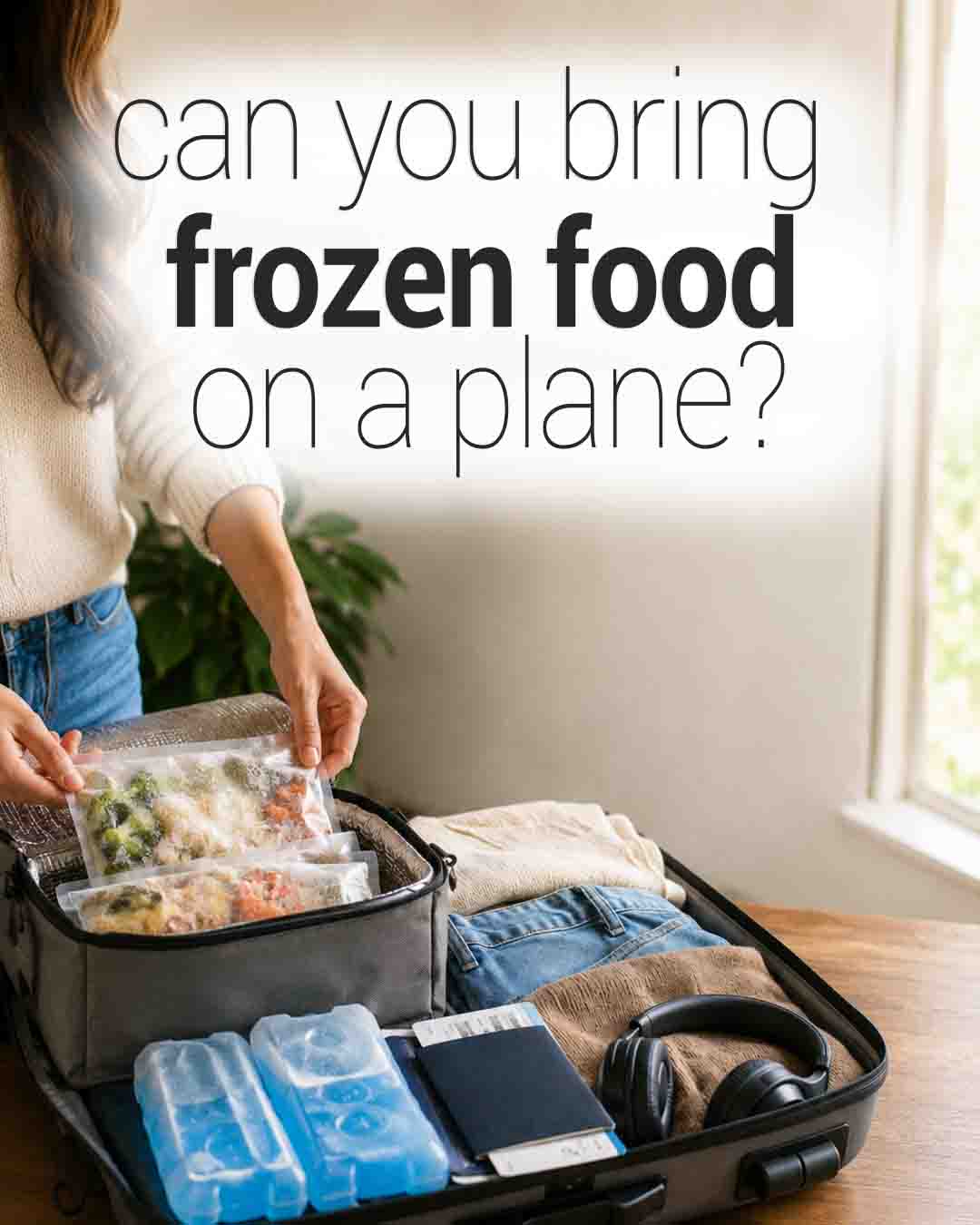
Frozen meals and food, in general, are game changers when traveling, but can you bring frozen food on a plane?
Here is a quick answer. yes, you can bring frozen food on a plane in both your carry-on and checked bags, just make sure the food is completely frozen solid when going through the security. If there is any liquid or slush at the bottom of the container, you will not be able to take it on board the airplane.
In this post, I will cover everything you need to know about taking frozen food on both domestic and international flights.
Let’s dive right in.
TL;DR
- You can bring frozen food in both carry-on and checked bags.
- You will need to make sure that your frozen food and ice packs is completely frozen solid when going through TSA.
- If the food is melted or have liquid/slush, they may not pass security.
- You can bring frozen meat, fish, meals, soup, and other frozen foods, but each country may have their own customs restrictions.
- Pack frozen food in an insulated cooler or thermal bag with ice packs to keep it cold during your trip.
Can You Bring Frozen Food Through The TSA Checkpoint?
The TSA has clear rules when traveling with these types of food.
You can bring any type of frozen food through the security checkpoint and on board the airplane.
But there are some rules you need to keep in mind
Here is a screenshot from the TSA website:

If you wan to bring your frozen food with ice, the ice needs to be completely solid and frozen.
Unless you are traveling with a child, if the ice is melted or the food is in liquid form, the security agent won’t let it pass through the security checkpoint.
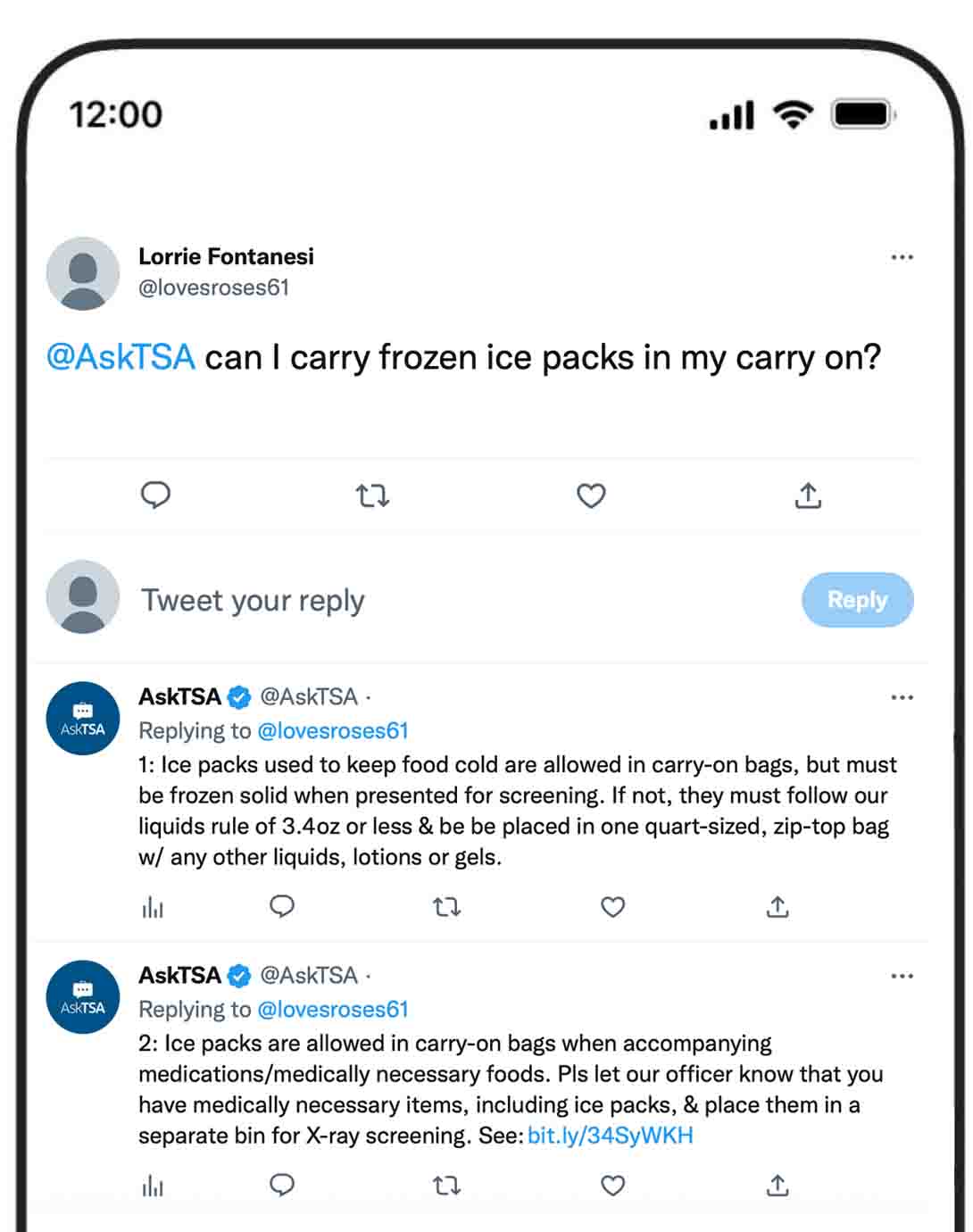
I wanted to find more answers from the TSA social media, mainly X, and her is what I’ve found.
Melissa asked the TSA if frozen vacuum-packed beef brisket is allowed in carry-on luggage.

The TSA customer service replied that frozen food items are good to go in carry-on bags.
Even frozen crappies are accepted in carry-on bags, the AskTSA team replied to Lynda.

If you are taking the food in a small separate bag, remember that your bag needs to fit within your airline’s carry-on or personal item size limits.
If your bag doesn’t fit either as carry-on or personal item, it will be subject to checked baggage rules.
Can You Bring Frozen Food In Checked Luggage?
Frozen food is allowed in checked bags, and there are no restrictions on how much you can bring.
The biggest benefit of taking food in checked baggage is that you don’t need to worry about the security checkpoint, and even if you have a small amount of melted ice on it.
Even though it is not generally recommended to place frozen food in the airplane’s cargo hold, it is still allowed.
Checked baggage is not always handled carefully, so there is a greater chance that your bag or item will be tossed around.
How To Pack Frozen Food For Both Carry-on And Checked Baggage?
You will need to do some preparation to keep your food frozen while traveling.
Here are some tips to follow:
- Freeze the food several hours before the flight: Freezing the food a few hours before you head to the airport will help buy you some time and prevent the food or the ice from melting at the airport or during your flight.
- Use ice packs: Ice packs stay frozen longer than ice cubes, so add a few ice packs to help maintain the temperature of the food. For even better results, freeze the ice packs a few days before you use them.
- Use a cooler or an insulated thermal bag: This will help maintain the temperature of your food in both carry-on and checked bags. Make sure you choose a quality cooler that will last throughout the trip.
- Use aluminum foil: Even if you pack the food in a cooler, wrapping it in aluminum foil can help it stay cold for longer, even for several days.
The temperature in the cargo hold is generally cooler than in the cabin, so if you happen to pack the food in checked baggage, there is usually nothing to worry about.
Can You Bring Frozen Soup On a Plane?
You can bring frozen soup on a flight in both your carry-on and checked bags.
There are no limits on the amount of soup you can bring, as long as it is completely frozen.
If the soup is not frozen, unfortunately, you won’t be able to take a large amount on board.
Only 3.4 oz / 100 ml of liquids are allowed in carry-on baggage.
This amount doesn’t make much sense if you want to bring a decent quantity of soup.
On the other hand, if you are traveling with a child, you can bring soup for your child even if it is not frozen and exceeds the amount mentioned above.
Can You Take Frozen Food On International Flights?

Taking food in general, to some countries comes with restrictions.
Many countries are concerned about pests or diseases that some types of food can introduce into their territories.
You can bring any type of frozen food on an international flight and consume it during your journey. However, if you are entering another country, you will need to know that country’s rules and whether you need to declare the food at customs.
Here are some rules:
| Countries | Rules |
|---|---|
| United states | Most meat and fruits and vegetables are not permitted to bring to the US even when frozen, you will need to declare any type of food you bring to the US; There is a really useful website Dontpackapest, where you can search any food, and find out their policies and if it is allowed to bring to the United States. |
| Canada | Canadian authorities have restrictions on the type of food you can bring, especially frozen vegetables, fruits and meat. |
| United Kingdom | You can’t bring frozen meat and dairy products when traveling to the UK from countries outside the European Union. |
Final Thoughts
You can bring frozen food on a plane on most domestic flights, in both carry-on and checked baggage.
If you are taking frozen food packed with ice, the ice needs to be completely frozen before it goes through the security checkpoint; otherwise, it won’t be permitted on board the airplane.
If the ice or the food has melted, you will need to place it inside your checked bag.
Just ensure that you pack your food neatly to avoid any leaks or spills in your bag.
I hope this answered all your questions about traveling with frozen food in both carry-on and checked baggage.
Happy travels.
FAQs About Bringing Frozen Food On a Plane
Can I use dry ice to keep frozen food cold on a plane?
Dry ice can be useful for keeping food frozen during a long journey, while regular gel packs may be enough for shorter trips. However, you need to check whether your airline allows dry ice and follow its rules, including the 5.5 lb (2.5 kg)weight limit.
Can I pack frozen food with dry ice in an airtight cooler?
If you use dry ice, the container must not be airtight because dry ice releases carbon dioxide gas as it melts. The gas needs a way to escape to prevent pressure from building up inside the container.
How long can frozen food stay out of the freezer while traveling?
You should calculate the total time the food will be out of the freezer, including the drive to the airport, time in the TSA line, flight, baggage claim, and trip to your final destination. The goal is to keep the food below 40°F (4°C) so it stays safe to eat.
Should I pack my frozen food so it is easy for TSA to inspect?
Yes. The TSA folks may need to open your cooler to inspect the food, so pack everything securely but make sure the cooler is easy to open and reseal at the security checkpoint.
How can I keep frozen food cold for longer during a flight?
Try to minimize empty space inside your cooler because large gaps can allow the food to warm up more quickly. You can fill the gaps with bubble wrap, newspaper, or additional ice packs to help maintain a low temperature.
How do I prevent a cooler from leaking when traveling with frozen food?
Use a leak proof cooler or container. As frozen food and ice begin to melt, condensation and liquid can leak out, potentially messing your clothes or other belongings and causing problems with your luggage.
Do I need a freezer at my destination for frozen food?
If you want to keep the food frozen, you need to make sure your hotel, Airbnb, or host has a freezer available when you arrive. This will help prevent the food from thawing and spoiling after your flight.
People also ask:
- Can You Bring Meat On a Plane?
- Can You Take Beef Jerky On a Plane?
- Can you bring fruits on a plane?
- Can You Bring Oatmeal On a Plane?
- Can You Bring Pizza Through TSA?
- Can I Bring Onion On a Plane?
- Can You Take Tamales On a Plane?